Document your days: An intro to taking better photographs of your life with whatever camera you already have.
4 min read.
There’s no need to press the “skip to recipe” button here. Promise.
one: You don’t need a fancy camera to start taking great photographs.
You’re likely reading this article on a device with a camera built-in, right? Cool. That means you don’t need to buy anything special to start taking photographs today. The best camera you have is the one with you and I’ll be honest, as someone who has a few fancy cameras, they aren’t always suitable for documenting your everyday life. Why?
Big and bulky: if it doesn’t fit in a pocket, it’s not easy to just grab when you need to.
A bigger camera can feel intrusive - especially when you’re photographing people. Think about it: when have you ever had a bigger camera in your face and not stopped doing whatever it was you were doing? It’s pretty hard to act like it isn’t there, right? Using a bigger camera to document life candidly can interrupt the moment and that kind of defeats the purpose here, yanno.
It’s not really a cheap hobby. I mean, sure, you grab a camera. It can quickly escalate into lenses, and a more capable computer and boom: you’re tits deep into a hobby that could have been a Honda Civic. That’s dramatic. I know, but obsessing over gear can be a slippery slope sometimes, especially when you’re hoping a new camera will take better images. I mean, it might, but observing how light shapes things and how moments build and unfold is what will help your images reflect what you saw or felt.

Wes had several hairs that were longer than all the rest. I photographed them at sunrise in our basement apartment in Fredericton.
I photographed them because I knew it wouldn’t always be this way.
two: Document today so you remember it tomorrow…
… Or 30 years from now. Either way, don’t hesitate to take your camera out and take the photo.
IMPORTANT
Create a new folder on your phone or computer. Immediately transfer the images you want to see printed after you’ve taken them. You can edit them later but you’ll be able to access them easily here. If you don’t, the images might as well have never been taken. It sounds aggressive, but in our digital world, we need to create strong routines to print our images. Your photos can’t just die on social media. MAKE PRINTS.
Immediately set a reminder in your phone called “print images from print folder”. Set it up monthly, quarterly, every six months - whatever works best for your brain. Not keen on doing a bunch of prints? All good - I love the idea of photo books. Pikto is a Canadian company that produces beautiful books. They make great gifts and provide a tangible way to keep your photos organized for easy viewing and storing. Photo books are also great for those who have a hard time choosing their favourite image to put on a canvas. I’ve found flipping through a photo book a helpful way to isolate my favourite, but I’m also the type who still loves reading physical copies of books because it feels more real so do what that information whatever you will. MAKE PRINTS.
DON’T LET YOUR PHOTOS DIE ON YOUR PHONE. MAKE PRINTS.
* I love Carsand for printing locally. They’re based in Truro, NS.
Three: Do not disturb.
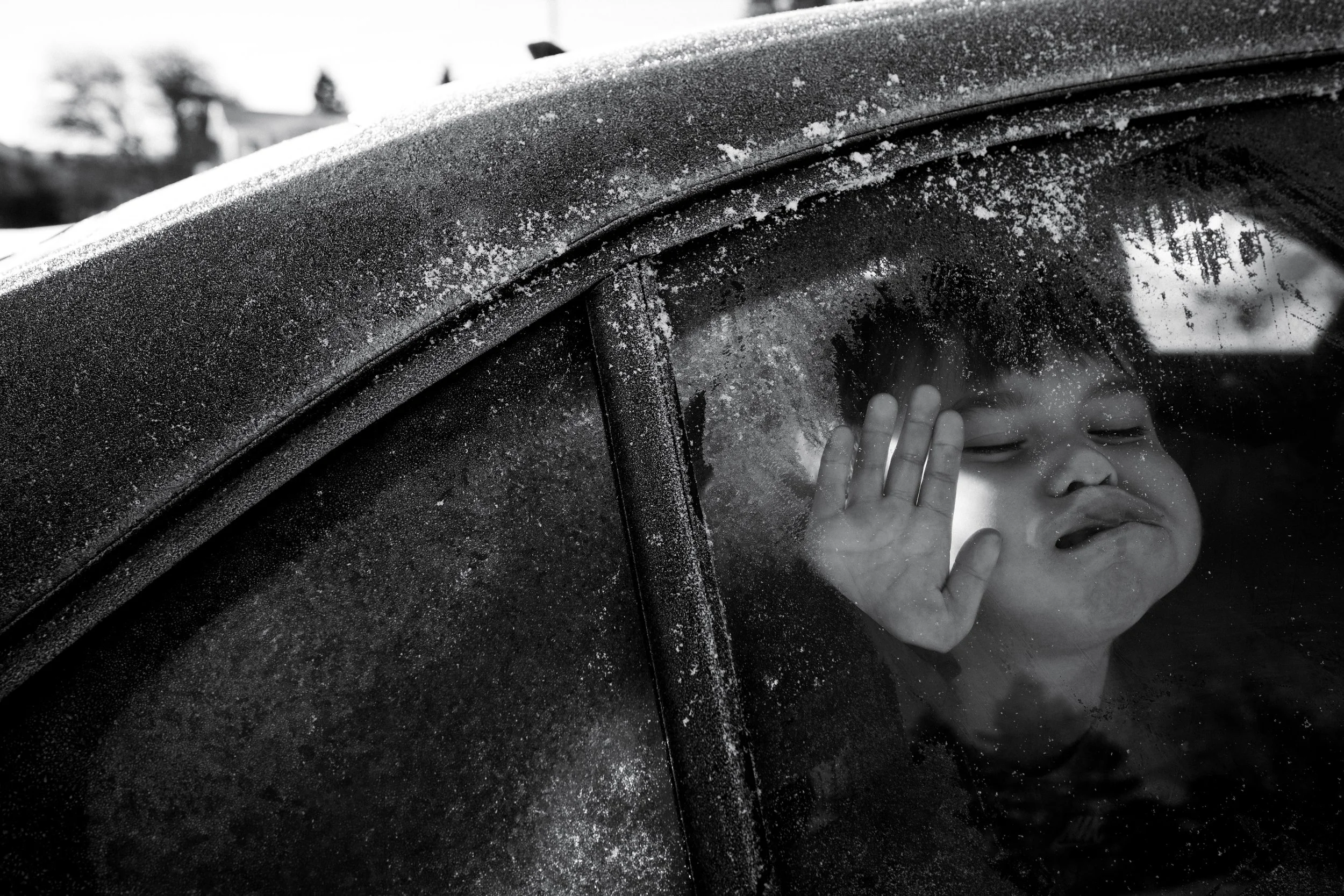
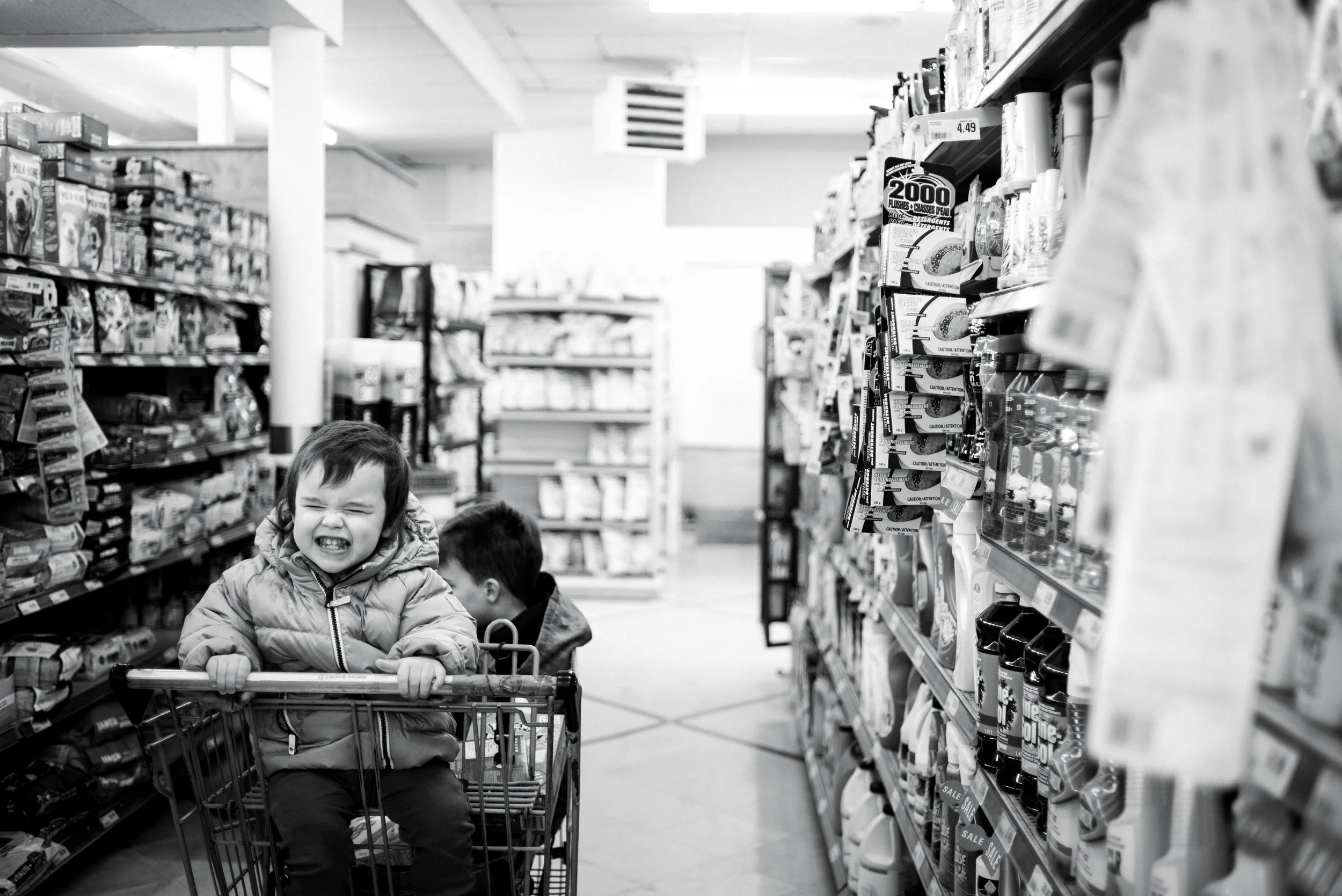
Don’t clean up the mess. Don’t stop the moment. Don’t pose. Don’t ask to smile. Just observe and snap.
Treat these photos like a diary where you use photos instead of words. You wouldn’t clean up anything in a diary - it’s a spot where you’re meant to write your feelings honestly and document your day. You don’t leave anything out because you want to remember it exactly as it was while it’s fresh.
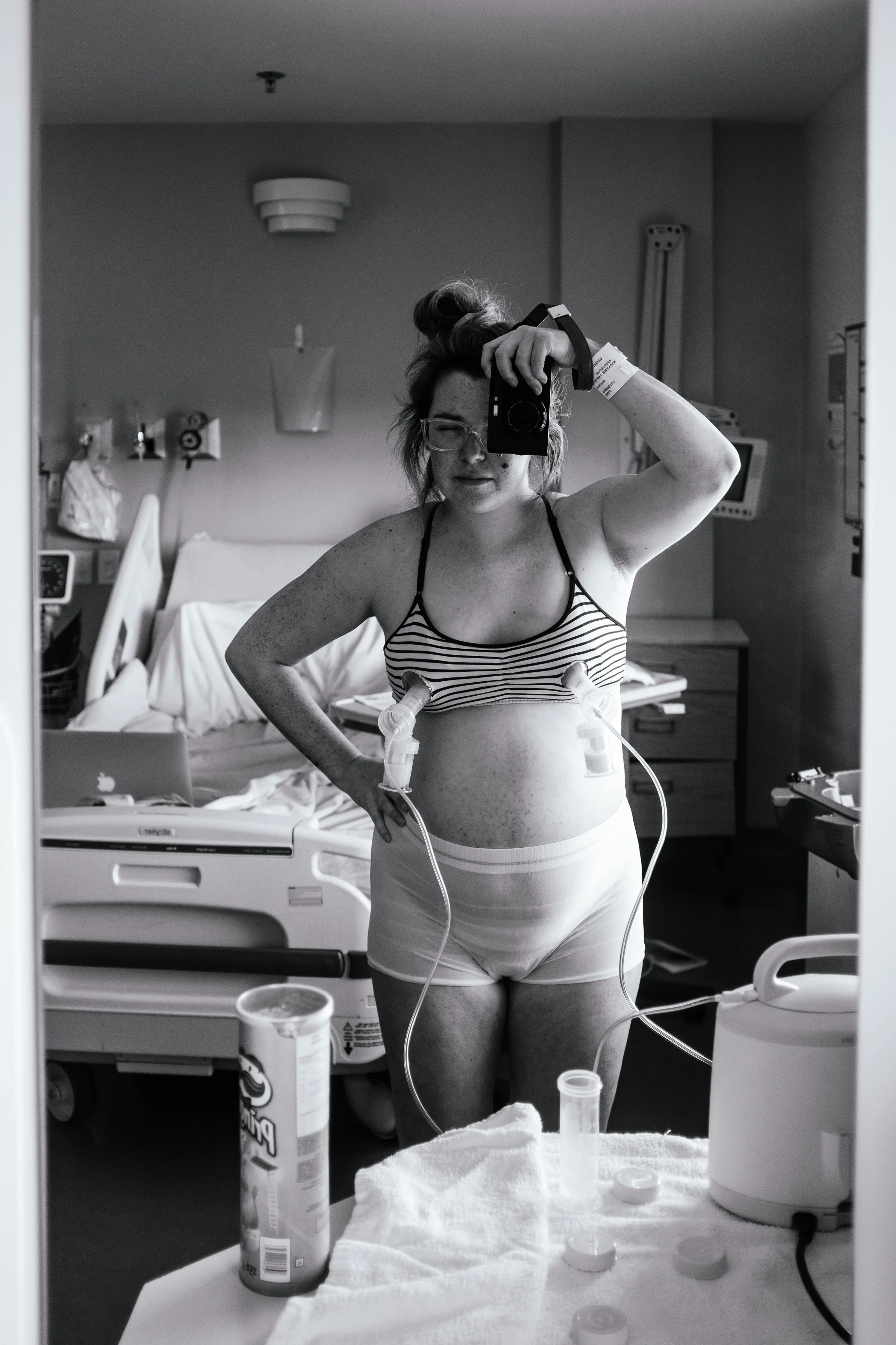
Ten weeks early.
Two days postpartum after an emergency c-section in the height of Covid, isolated from the people I needed while feeling like I had a Scotsburn quota to feel while simultaneously feeling like I’d been hit by one of their trucks. IWK NICU 2020.
FOUR: It will not be perfect every single time.
And that’s okay.
There is still an importance in photographing the hard stuff. The ugly stuff. It can be nice to reflect on these kinds of images to remind yourself that you got through it and came out on the other side.
To admit that I was fucked up after Arlo’s birth is an understatement. I don’t remember much but I do remember feeling like I needed to take a photo of my body during those first few days. My incision site radiated with pain, even with medication. I hadn’t showered in days and I was living on Pringles, juice boxes and lime Jello. I found it incredible that even while I was so battered, my body had activated some sort of auto-pilot that knew I had to produce milk. It’s a cruel thing to not get a break after something like that. After seeing so many images of people looking radiant and happy after birth, I felt I needed to document my own representation illustrating the opposite end, hoping it might resonate with someone else who felt that way, too.
FIVE: Photograph your routine.
I used to photograph our lives on Monday’s. A friend and I had a series called #MundaneMumdays to bide our time during Covid with littles at home. On Monday morning, I’d set my camera where it would be easy to grab. Throughout the day, I’d try to make images, even on the days we didn’t leave the house. Not only did this create consistency, but it activated a mindset to observe a little more on the days I’d set aside for documenting us.
It felt boring at the time. If you have kids, you know those first few years can feel like a bit of a trudge when you’re in it. The lack of sleep or personal space can make for some long days. I’m thankful for the photos now. I think I was too tired to remember those moments but I have these images to remind me of the wonderful days when they were so small.
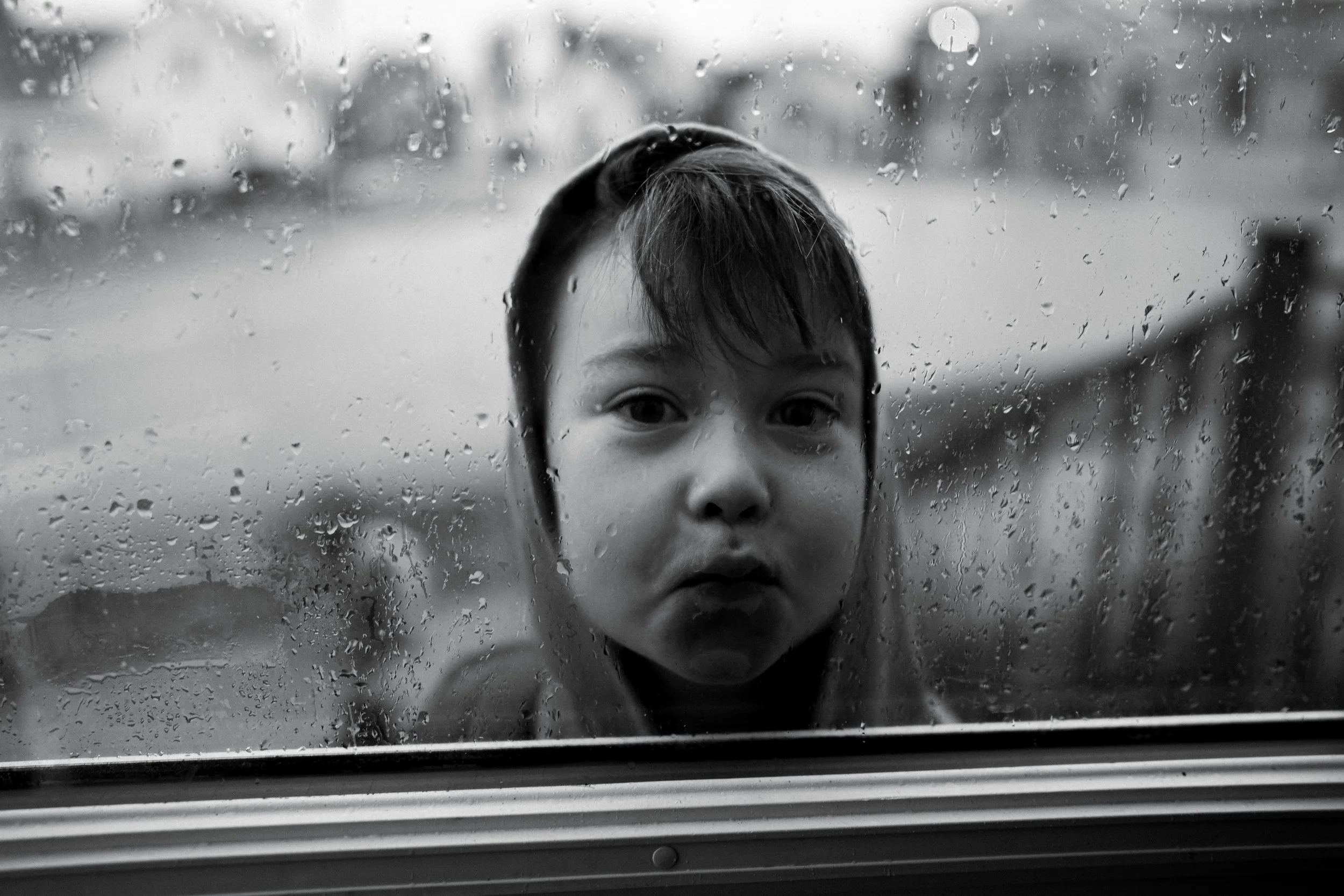
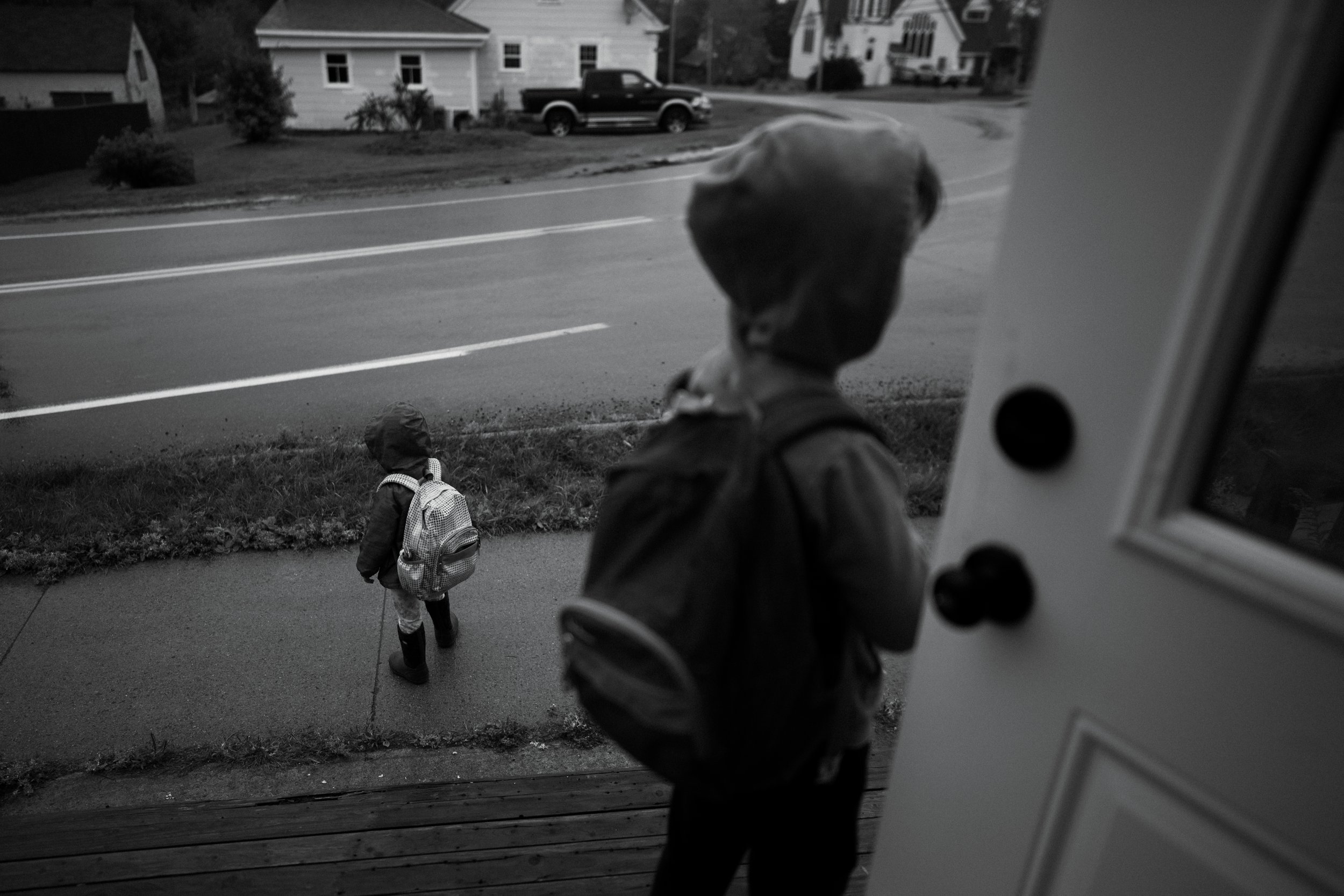
Now that they’re bigger, I find I take more photos of them in the mornings and on weekends. For no apparent reason, I photograph our bus stop often. I like to see the changes throughout the year.
Here are some things you can keep in mind when you’re looking to take great photos of your life
Messy house? Turn your overstimulation into art, girl. Photograph the shoes scattered by the door. The toast crumbs. The tooth paste that sticks to the sink. The piles of imagination that are no doubt strewn all over. Why? It’s proof of life. It might not always be like this. This silly act of photographing mess tunes your mind into finding beauty, even in spots you might not think to uncover it.
Observe natural frames like doors, windows, or overgrown paths. Create a frame within your frame when you’re composing an image. This might require you to step back. This might require you to ask your kids to run back and forth in front of your frame so you can put them into your image without posing them.
Incorporate identifiable landmarks into your images like the front door of your house, the rink your kids play hockey at - just make it something that you can come back to. This is important and helps you place each image years down the road as you piece together each image.
Photograph the favourite things. This might be a favourite shirt, a favourite bedtime story, a favourite snack: whatever comforting item it is, photograph it in it’s natural state.
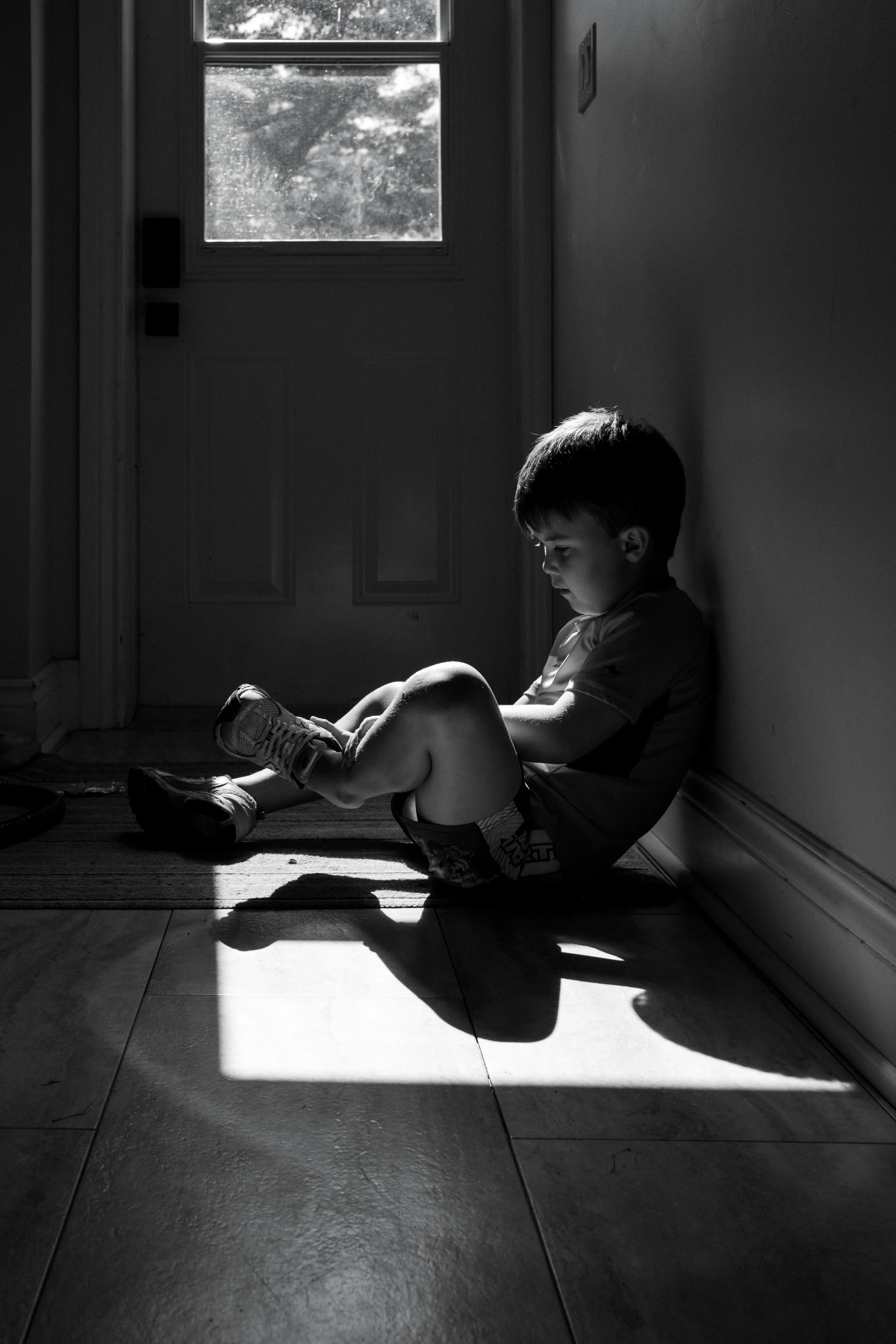
Look for the light: In the late afternoon, light streams into our backdoor. It’s often a dramatic light that hits but it makes for some interesting contrast as seen in the photograph below this text. When you’re photographing with a smartphone, try tapping around the screen. You can press the areas that are really bright or really dark to tell your camera which spot you’d like to expose for. On iPhones, you can hold your finger down on the area you want to become lighter or darker and a slider will appear, allowing you to manually change your exposure. By holding this for a few seconds, a small box will appear where your finger is to hold onto the exposure you’ve chosen and your focus point, allowing you to recompose your frame if you want.